
Why doesn't graphite replace seed treatment?
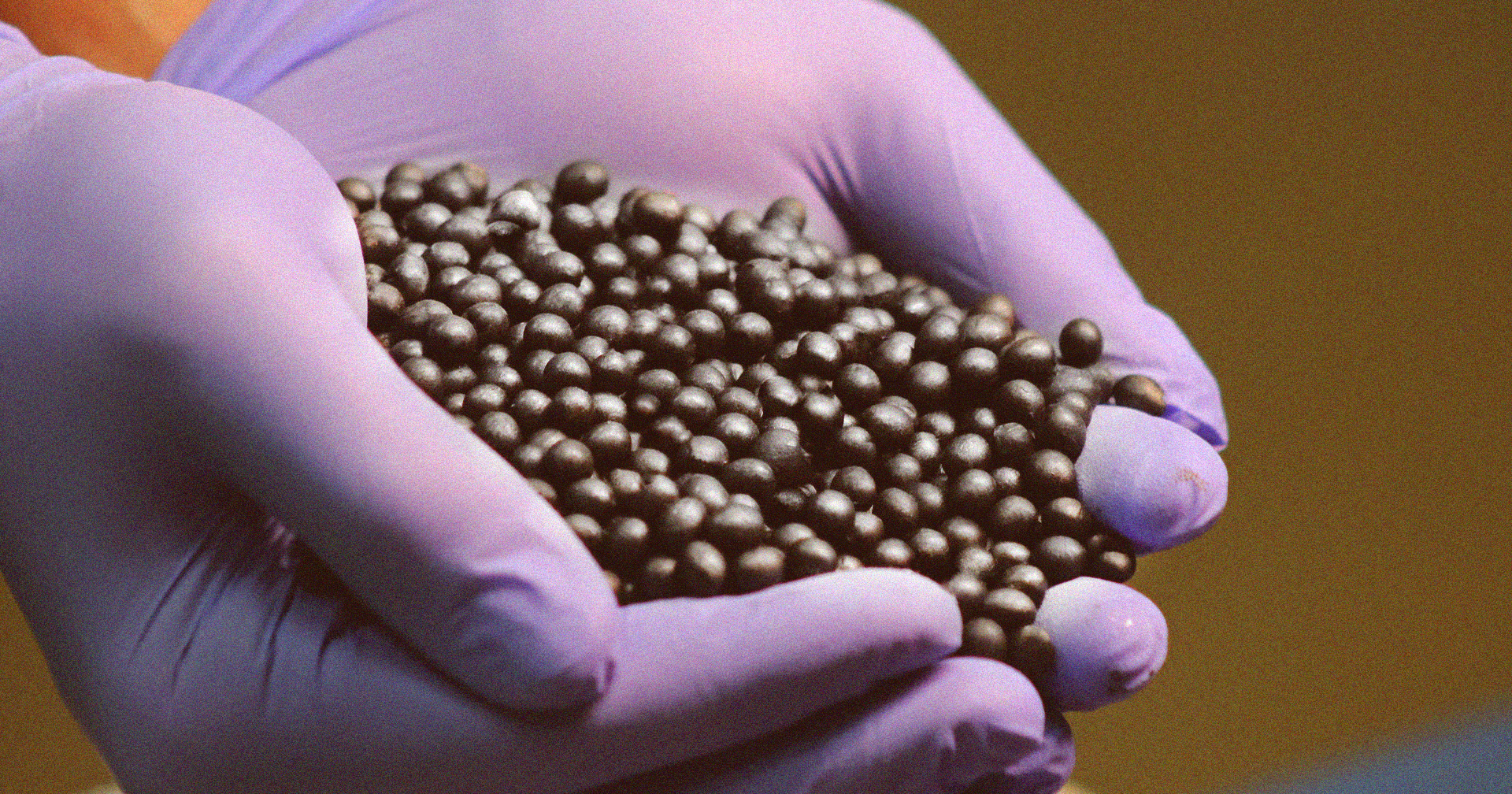
Anyone who is involved in the world of agriculture will surely have seen a seed with a unique shine, which looks flawless and ready to germinate. However, this shine is not always a guarantee of effective and complete seed treatment.
In this constant search for productivity and profitability in the field, some inefficient practices end up appearing, and unfortunately they can end up causing a great deal of damage. One of these actions is the use of the famous graphite to give the seeds a “pretty finish”. But does a nice look mean protection?
Today we're going to demystify the role of graphite, This is why this product will never replace a treatment carried out with the technology and care that your seed deserves.
What is graphite and what is it used for?
First of all, let's be clear: graphite plays a role in agriculture. It is a mineral found in mines and compounds and is pure carbon. Even so, it is not a toxic material and so its use in planting is safe and accepted when done correctly.
Its main characteristic is that it is a fine powder with lubricating properties. When applied to the seeds, it creates a thin, slippery layer around them. This is important because seeds, by their nature, tend to have a rough surface. Inside the packet or when they are distributed by the planter, this roughness can generate friction between them and the machine's parts.
If the seeds are planted without this proper “lubrication”, the problems can be serious:
- Planting failures: Some seeds may not fall into the furrow, leaving empty spaces in the row.
- Double (or multiple) planting: More than one seed can be deposited in the same space, generating excessive competition for nutrients and light.
- Premature wear of the planter: Constant friction accelerates the degradation of machine components.
In other words, graphite is a plantability aid that optimizes operation in the field. It improves the “behavior” of the seed in the machine. But it is essential to understand that it does not protect against pests or diseases, nor does it provide nutrients. It is a lubricant, not a fertilizer.
| Curiosity: Did you know that Brazil is among the the world's three largest graphite producers? Most of Brazil's graffiti comes from the state of Minas Gerais, which puts us in a strategic position in this market! |
How to use graphite correctly?
To ensure that graphite to do its job without causing problems, the correct application is essential. So before you start, always check the manufacturer's instructions on the product packaging. Dosage recommendations may vary slightly between brands and types of seed.
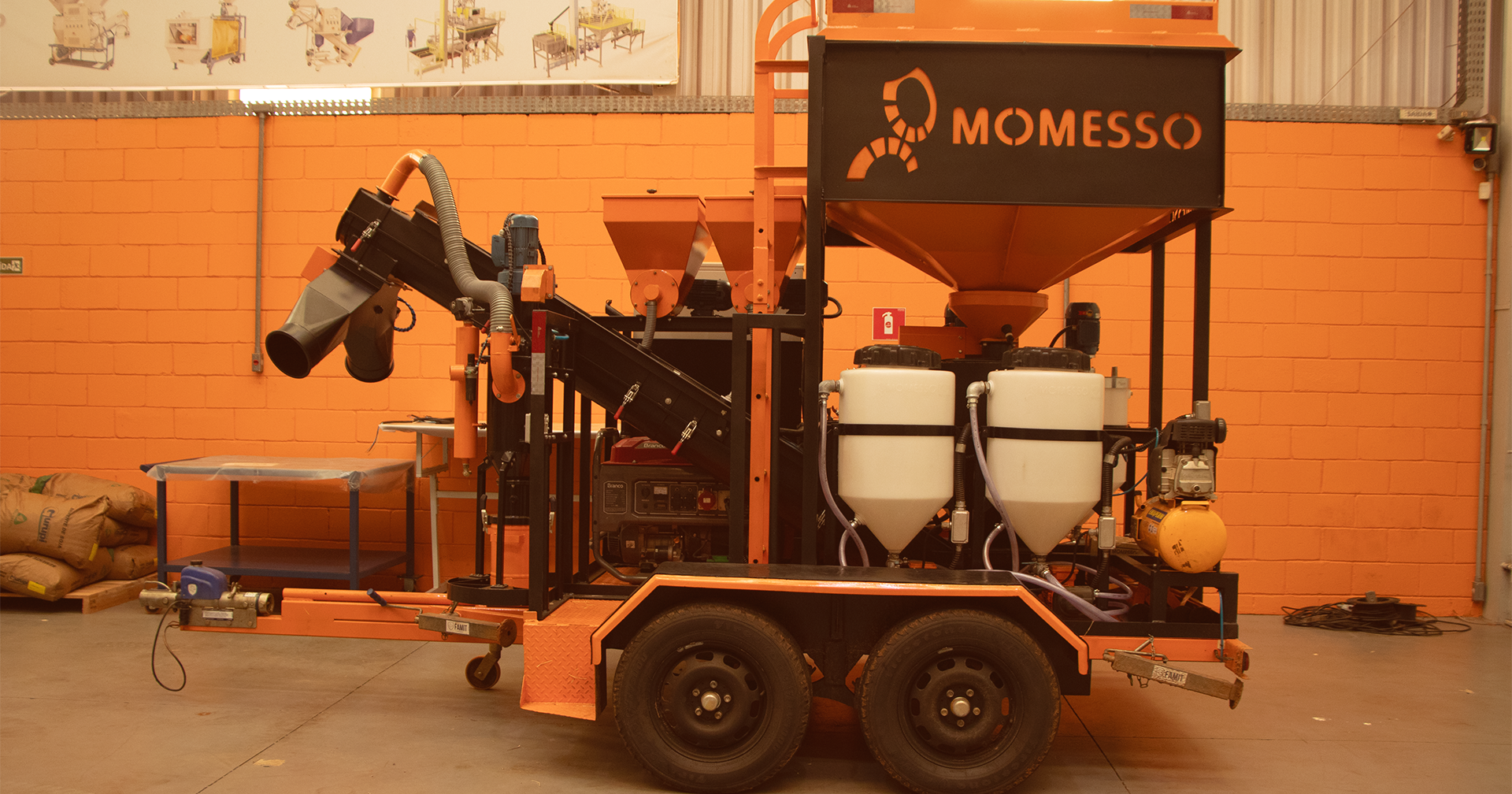
Normally, graphite is mixed with the dry seeds before they are placed in the planter box. In Momesso machines, this mixture includes powder dispensers which allow automated and precise application of both graphite and drying powder. This feature ensures greater efficiency, economy and safety in the process, avoiding excesses and failures in seed coverage.
The aim is for each seed to receive a thin layer of graphite, ensuring lubrication. It's a simple process, but it requires attention to dosage so that the benefit of plantability is real and there is no waste.
Does graphite replace bad seed treatment?
Now, let's get to the crux of the matter, where a lack of information or the search for shortcuts can cost your plant too much.
Many specialized companies or even some seed companies that make on farm treatment do not have the seed treatment equipment or the experience required to ensure optimum dosage and uniform coverage.
What ends up happening in these situations?
The pesticide or nutrient simply doesn't spread evenly over the entire surface of the seed. In this case, the seed may receive an excessive amount of the product, which can cause phytotoxicity (plant intoxication), or, what is more common and equally dangerous, it receives too little product, leaving it completely unprotected against pests and diseases. Or, what is more common and equally dangerous, it receives an insufficient amount of product, leaving it completely unprotected against pests and diseases.
It's exactly at these times that inappropriate use of graphite comes into play. To try to disguise these flaws in the coating or to give the seed a more homogeneous and “beautiful” appearance, some people end up adding graphite after a bad treatment. The intention is for the seed to look well-treated and “professional”.
On the inside, that is, in its essential protection and nutrition, this seed remains vulnerable. And a seed that only looks well-treated, but is not actually protected, is a very high-risk investment that can lead to serious consequences:
- Low germination: The seed doesn't grow as strongly as expected, or at all.
- Attack by early pests and diseases: It is unprotected against fungi and insects in the soil, which are a real danger in the early stages.
- Compromised development: The seedling doesn't get off to an ideal start, compromising the development of the entire crop.
- Financial loss: All your investment in seed, soil preparation and other inputs is irrelevant, culminating in significant losses at harvest.
Seed treatment is the ideal choice
It is essential that every producer understands that Seed Treatment (ST) is not a “cosmetic finish”. It is the first and most important line of defense for your crop. A well-done TS is the guarantee and the basis for:
- Complete protection: Against the main pests and diseases that attack seeds and seedlings in their early stages, right from planting.
- Vigor and uniformity: All the seeds germinating at the same time, with the same strength and developing evenly.
- Optimizing genetic potential: If you have invested in high-quality seeds with superior genetic potential, the right treatment ensures that they have 100% of that potential.
- Long-term savings: Effective treatment reduces the need for replanting, minimizes the use of post-emergence pesticides and drastically reduces crop losses. It's an investment that pays for itself in the harvest.
For all these benefits to be realized, precise dosing and uniform coverage of the product on the seed are very important. You can't rely on “luck”, rudimentary methods or tricks that only disguise reality.
Momesso as your partner in agribusiness
A Momesso is dedicated to offering the most advanced equipment for Industrial Seed Treatment (IST). Our machines are designed with cutting-edge engineering to ensure that each seed receives the exact dose of product - always in a uniform, controlled and precise manner.
No more uncertainty, no more hidden costs and no more tricks that don't work! The future of your productivity lies in choosing a seed treatment really effective and precise.
Are you unsure about how to ensure the best treatment for your seeds? Talk to our experts now and discover how our technology can help your investment and boost your results!
READ ALSO:
Are you afraid of becoming a more technological producer?
