
5 Seed Treatment Curiosities You Probably Didn't Know
Did you know that the seed can only represent 5% of the cost of producing a crop, but can account for up to 50% harvest success? Well, it's much more strategic than many people realize.
And when we talk about Seed Treatment, We're talking about a process that protects, standardizes and enhances this small grain that carries within it the entire future of the crop. More than just a technical step, treatment is a competitive edge which brings together science, technology and sustainability.
But behind this whole process, there are details that go unnoticed and are even surprising. Next, five curiosities which show why seed treatment is one of the pillars of modern agriculture.
1. Seed quality can account for up to 50% of crop success
Determining vigor, germination and final productivity (EMBRAPA, 2008; Gazzola Neto, 2020), the seed, even though it represents a small slice of the cost of production, is the starting point for everything.
Investing in quality, well-treated material guarantees this:
- Higher germination rate;
- Initial protection against pests and diseases;
- More uniform emergence;
- Reduced replanting.
In a nutshell: productivity starts with the seed.
2. The color of the seed is much more than aesthetic
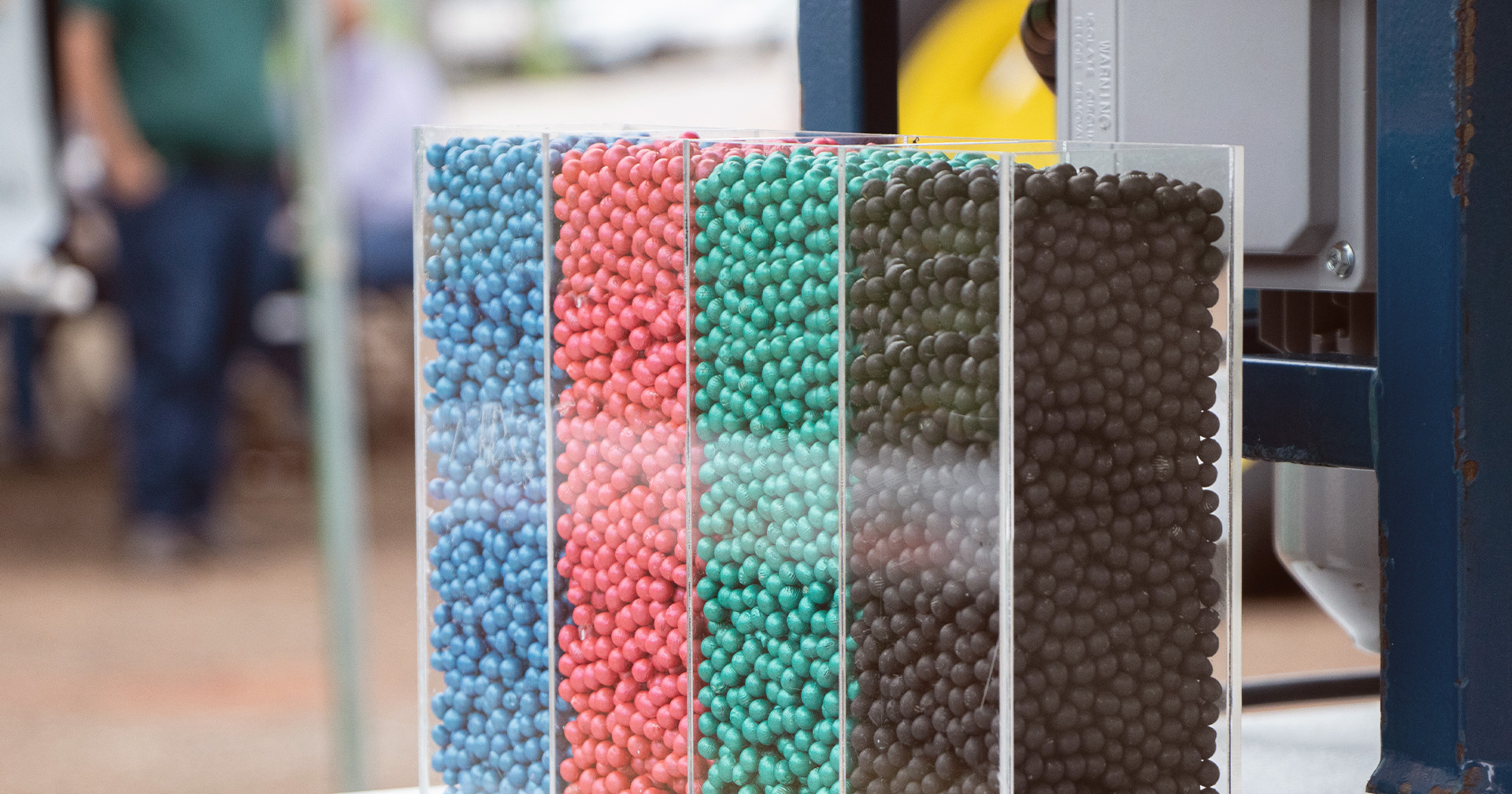
The color of the treated seeds is a visual indication of quality.
- Uniform color shows that the process has been carried out well;
- Stains or flaws can indicate problems with the application;
- Different pigments help with traceability and batch identification.
What's more, pigmentation is mandatory by law, according to Decree No. 5.153/2003, which regulates the domestic trade in seeds:
Art. 95 - “Coated seeds must be colored differently from the original color of the seed to differentiate them from uncoated seeds.”
This requirement prevents treated seeds from being mistaken for grains intended for consumption and reinforces the sector's commitment to security and traceability.
3. Treatment has come a long way since the early days
The first records of seed treatment date back to the 17th century, when the English naturalist Robert Boyle reported experiments with salts and compounds to protect stored grains (FAO, 2006).
Today, the scenario is different:
- Automated machines;
- Intelligent polymers that fix inputs better;
- Digital monitoring of each batch.
What started out rudimentary has become cutting-edge technology.
4. IST contributes to sustainability
Treating seeds correctly means use only the necessary dose of pesticides and biostimulants, This brings environmental and economic gains.
- Fewer foliar applications throughout the cycle;
- Reducing waste;
- Lower environmental impact.
What's more, modern polymers reduce dust, improve the working environment and prevent losses during the process.
5. Brazil is a world reference in seed treatment
Tropical agriculture posed unique challenges: varied soils, irregular rainfall and high pest pressure. It was in this context that Brazil has developed robust technologies, They are capable of delivering uniformity and precision on a large scale.
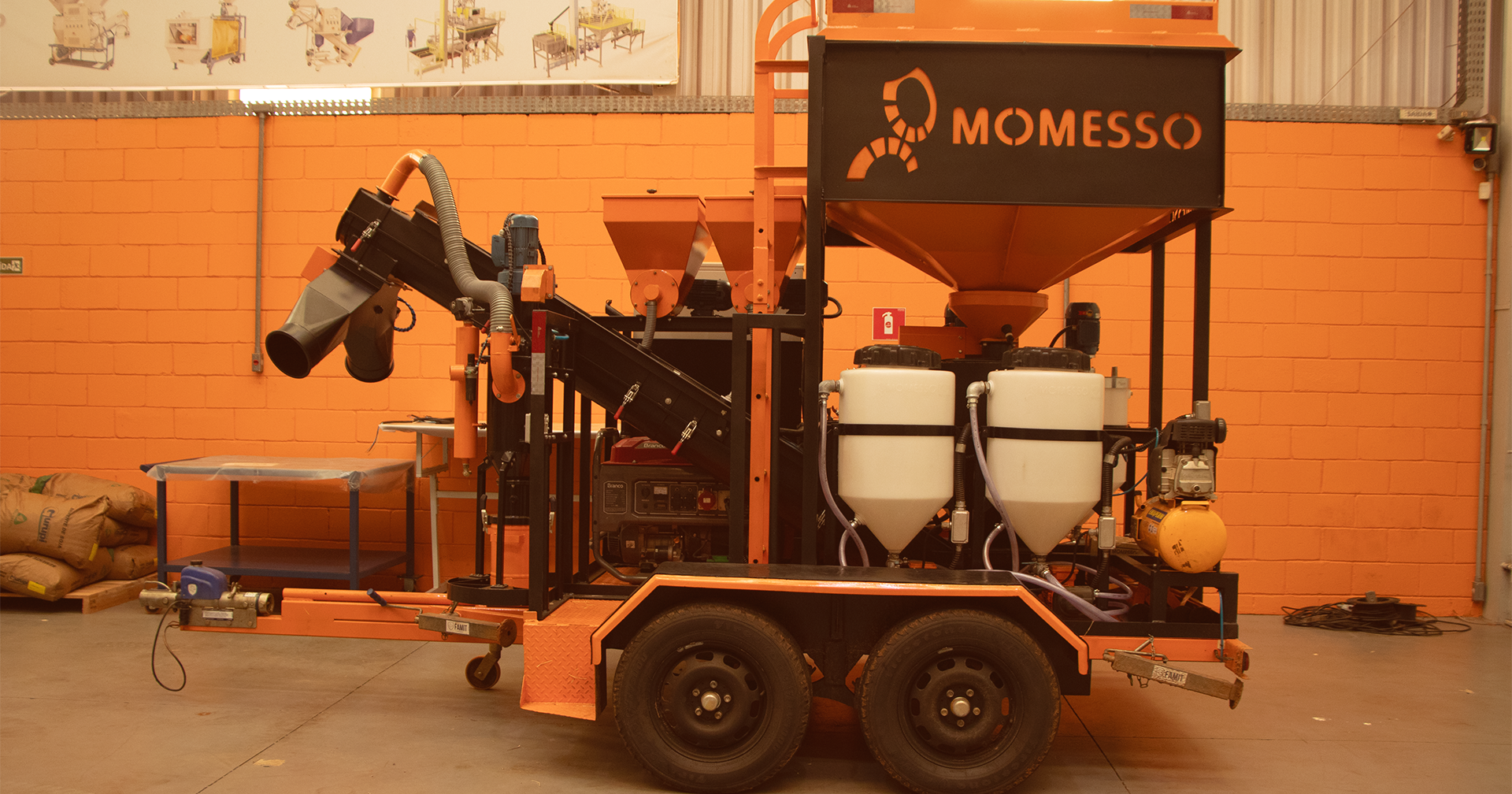
Today, Brazilian companies such as Momesso are internationally recognized, exporting machines and solutions that unite innovation, robustness and reliability.

Beyond curiosity, a competitive edge
These curiosities reveal a simple truth: seed treatment is strategic for transforming potential into productivity. The process favors uniformity, reduces losses and helps the farmer to better exploit the genetic value of the seed.
But it's important to remember: for the results to really show, several factors influence performance in the field, This is due to the fact that the treatment is carried out on each property, from the management adopted by the farmer to the soil and climate conditions.
It is precisely at this point that Momesso stands out: as partner of the agronomist and the producer, offering modern, precise and high-quality equipment, designed to guarantee a uniform, efficient and safe treatment.
The final performance in the field, however, depends on the set of good practices adopted throughout the production process.
Treating the seed well is treating the future of agriculture well.
Talk to our experts and find out how Momesso can support your production on the road to efficiency.
READ ALSO:
Are you afraid of becoming a more technological producer?
